We ship to all countries/regions worldwide. Please send an email to our team for shipping quotes Click here!

Shisha (also widely referred to as hookah, narghile, argileh, or waterpipe) is both a traditional water-based smoking device and the flavored tobacco product used in it, with deep cultural roots across the Middle East, South Asia, and North Africa, and growing global popularity in recreational loungesU.S. Food and Drug Administration. The word “shisha” derives from the Persian term shīshe, meaning “glass”, a reference to the device’s iconic glass water base, and it is the most common term for the practice and equipment across Arab nations and much of Europe.
Origins & Cultural Significance
Most historians trace the invention of the shisha waterpipe to 16th-century India, during the Mughal Empire. It is credited to physician Hakim Abul-Fath Gilani, who designed the device to pass tobacco smoke through water, in a mistaken belief that this would “purify” the smoke and reduce harm.
From India, the practice spread rapidly to Persia, the Ottoman Empire, and the Arab world, where it became a cornerstone of social hospitality. For centuries, sharing a shisha has been a ritual for gathering friends, family, and business associates, serving as a social centerpiece in cafes, bazaars, and homes across the region.
Device Structure & How It Works
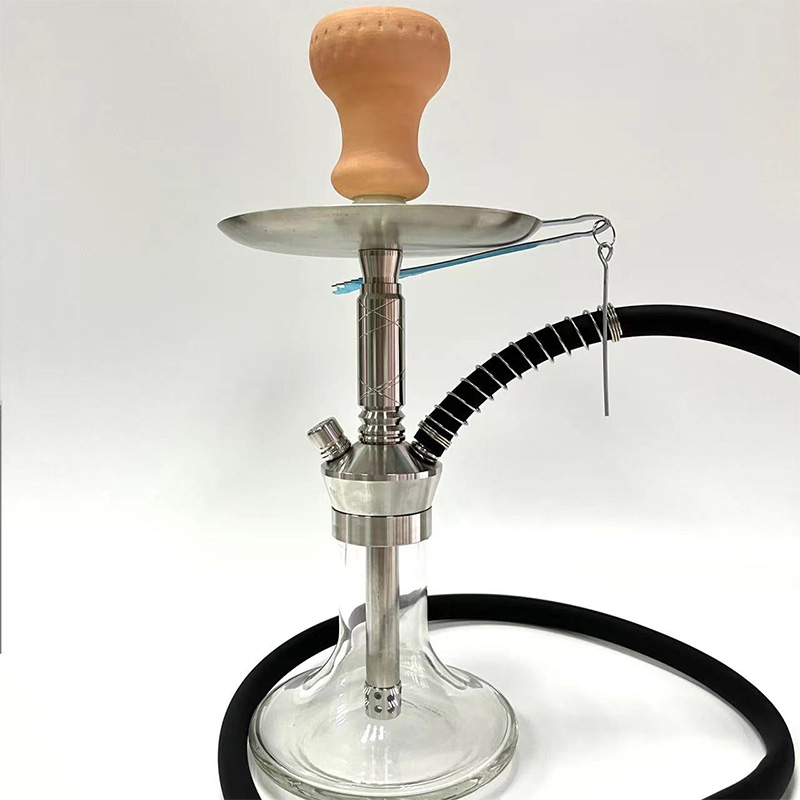
A standard shisha has a consistent core design, with 6 key components:
- Tobacco Bowl (Head): A small, typically ceramic bowl at the top that holds the shisha tobacco, usually covered with perforated foil to separate the tobacco from the heat source.
- Charcoal Tray: A metal plate that sits below the bowl to hold hot charcoal (the heat source) and catch ash. Modern setups often add a heat management device (HMD) for more consistent temperature control.
- Stem: A rigid metal tube that connects the bowl to the water base, with a downstem that extends below the water line.
- Water Base: A glass or plastic chamber filled with water, which cools the smoke as it bubbles through.
- Hose: A flexible, airtight tube connected to the stem, with a mouthpiece for inhalation. Most shishas support multiple hoses for shared use.
- Mouthpiece: The end of the hose, where the user inhales the cooled smoke.
How it operates: When the user inhales through the mouthpiece, negative pressure pulls hot air from the charcoal through the flavored tobacco, generating smoke. This smoke travels down the stem, bubbles through the water in the base (where it is cooled, not meaningfully filtered), and is drawn through the hose into the user’s lungs.
Common Smoking Materials
The primary product smoked in a shisha is maassel (also called shisha tobacco), a moist mixture of tobacco leaves, molasses, glycerin, and a wide range of flavorings—most commonly fruit (apple, grape, mango), mint, floral, or spice blendsU.S. Food and Drug Administration.
In modern lounges, nicotine-free and tobacco-free herbal shisha blends, flavored stones, gels, and liquid alternatives are also widely available, marketed as “safer” options, though they still carry health risks from combustion byproducts. The heat source is almost always natural coconut charcoal or quick-light charcoal, with electric heating systems as a smokeless alternative.
Global Modern Usage
Since the late 20th century, shisha has exploded in global popularity, particularly among young adults in Europe, North America, and Southeast Asia. Dedicated shisha lounges and cafes have become mainstream recreational venues, driven by the social, shareable nature of the practice and the wide variety of sweet, mild flavors that mask the harshness of tobacco.
Critical Health Risks
A widespread misconception is that shisha is a harmless alternative to cigarettes, but global health authorities including the U.S. FDA, WHO, and cancer research institutions confirm that shisha smoking carries severe and well-documented health risksU.S. Food and Drug Administration:
- Shisha smoke contains the same toxic and carcinogenic compounds as cigarette smoke, including nicotine (highly addictive), tar, carbon monoxide, heavy metals (lead, arsenic), and cancer-causing chemicals.
- A typical 60-minute shisha session involves 200–300 inhalations, exposing the user to roughly the same volume of smoke as smoking 100–200 cigarettes.
- Short-term effects include elevated heart rate and blood pressure, reduced lung function, and carbon monoxide poisoningU.S. Food and Drug Administration.
- Long-term use is linked to the same chronic conditions as cigarette smoking: lung, oral, esophageal, and bladder cancers, cardiovascular disease, chronic obstructive pulmonary disease (COPD), and reduced fertilityU.S. Food and Drug Administration.
- Shared shisha equipment carries a high risk of transmitting infectious diseases, including tuberculosis, hepatitis, herpes, and respiratory viruses, even when disposable mouthpieces are usedU.S. Food and Drug Administration
-
- B2B/OEM Orders: Fill out our B2B Inquiry Form(response within 24 hours) to discuss custom designs, MOQs, and bulk pricing.
- Direct Support: Need help refining your design or understanding EU compliance? Connect with our experts:
- Chad: chad@utop-hookah.com | WhatsApp: +86-15207690129
- Amy: amy@utop-hookah.com | WhatsApp: +86-13662748236
Join 500+ European independent stores that have turned our stainless steel hookah into a top seller. Durable enough for festivals, stylish enough for home use, and compliant enough to sell across the EU—this is the hookah your customers have been waiting for.